

Unreal Engine for architecture visualization | Your 2026 Guide to High-Value Remote AI Work
Unreal Engine for architecture visualization has moved from a niche differentiator to a standard tool in ambitious design studios. With real-time rendering, interactive walkthroughs, and photoreal materials, project teams can validate design intent faster and help clients make better decisions.
At the same time, AI teams urgently need domain-expert feedback to make design-aware models smarter and safer. That’s where you come in. If you’re fluent in Unreal Engine for architecture visualization, you’re uniquely positioned to earn as a remote AI trainer—evaluating prompts, scoring spatial reasoning, and benchmarking model outputs—on platforms like Rex.zone.
Expert insight: The best AI models are trained on expert judgments, not generic crowd labels. Architecture + Unreal Engine experts contribute high-signal, reasoning-rich data that improves model groundedness and visual-spatial understanding.
This article shows how to sharpen your Unreal Engine for architecture visualization workflow and translate that expertise into flexible, well-paid remote work on Rex.zone.
Why Unreal Engine for Architecture Visualization Is Now the Default
Architectural visualization (arch viz) is increasingly real-time. Unreal Engine 5 delivers three pillars that matter for studios and freelancers:
- Nanite: High-detail geometry streaming without heavy manual LOD work (Epic Docs).
- Lumen: Real-time global illumination and reflections that respond to design changes (Epic Docs).
- Datasmith: Robust import from Revit, SketchUp, Rhino, and 3ds Max (Docs).
Together they compress the time from CAD/BIM to photoreal. That speed is a competitive advantage—and the same judgment you use to reach photoreal is exactly what AI teams pay for when they need reliable, expert-level evaluation.
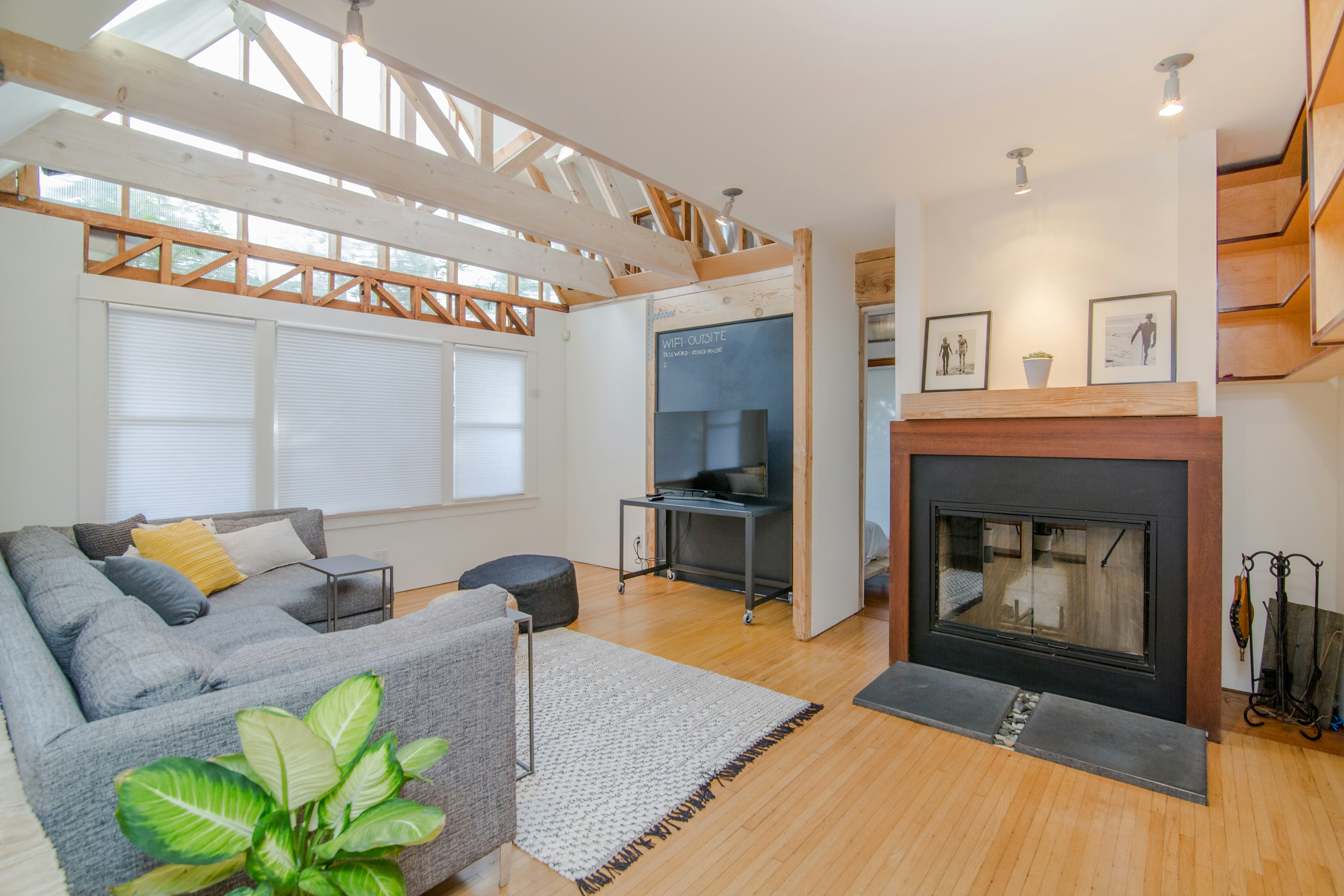
From BIM to Beauty: A Fast, Defect-Resistant Pipeline
1) Prepare Models With the Right Fidelity
- Clean in BIM: Purge unused families, simplify parametric details not visible at distance.
- Material naming: Use descriptive, consistent tags (e.g.,
INT_Floor_Oak_WidePlank), which will ease batch replacement. - Scale and units: Ensure meters or centimeters are consistent across Revit/SketchUp/3ds Max.
2) Import With Datasmith
- Use Datasmith Direct Link for Revit or SketchUp to iterate quickly.
- Map BIM materials to master materials in Unreal. For parametric variations (e.g., roughness/normal intensity), expose parameters in Material Instances.
3) Light for Decision-Making, Not Just Looks
- For interactivity, default to Lumen; for hero frames, consider Path Tracer (Docs).
- Establish daylight systems consistent with project latitude/longitude.
- Use lightmass-style discipline: balance direct/indirect lighting and guard against overexposure.
4) Optimize Without Compromising Photorealism
- Enable Nanite on static meshes with high poly counts.
- Consider DLSS (NVIDIA) or FSR (AMD) for smooth performance on client devices.
Pro tip: Keep a performance budget. Set targets (e.g., 60 FPS at 1080p on an RTX 2060) and profile early.
Choosing the Right Renderer Mode for Deliverables
| Mode | Best For | Trade-offs |
|---|---|---|
| Lumen (real-time) | Interactive walkthroughs, reviews | Minor GI artifacts in extreme edge cases |
| Path Tracer | Hero stills, cinematic shots | Long render time; no real-time interaction |
| Hybrid (RT Reflec.) | High-end tours on workstations | Hardware dependent; setup complexity |
Use Lumen during iterative design, then switch the same scene to Path Tracer for marketing-quality stills. This dual-mode approach reuses lighting and asset work while letting you ship the right output for each audience.
A Data-Driven Case for Unreal Engine in Practice
- Epic highlights major AEC firms using Unreal for real-time collaboration and client approvals (Industry overview).
- Real-time workflows can reduce rework: interactive reviews surface issues earlier, cutting downstream change orders. While impact varies, firms report faster iteration cycles when moving from offline CG to UE5.
Simple ROI framing:
$ROI = \frac{Time\ saved\ \times\ Bill\ rate - Tooling\ cost}{Tooling\ cost}$
Even conservative time savings on repeated render iterations can justify the switch to real-time—especially when you amortize asset libraries and master materials across projects.
Example: Automating Material Swaps With Editor Scripting (Python)
When you import from BIM, you’ll often want to replace placeholders with physically based materials. Unreal’s Python API can accelerate this.
# Unreal Engine Python example: swap materials by naming convention
import unreal

material_lib = {
    "INT_Floor_Oak_WidePlank": "/Game/Materials/Floor/M_Oak_WidePlank_Inst",
    "EXT_Wall_Brick_Red": "/Game/Materials/Facade/M_Brick_Red_Inst",
}

asset_registry = unreal.AssetRegistryHelpers.get_asset_registry()
static_mesh_assets = asset_registry.get_assets_by_class("StaticMesh")

for asset in static_mesh_assets:
    mesh = unreal.EditorAssetLibrary.load_asset(asset.object_path)
    if not isinstance(mesh, unreal.StaticMesh):
        continue
    mats = mesh.static_materials
    changed = False
    for i, sm in enumerate(mats):
        key = sm.material_slot_name
        if key in material_lib:
            new_mat = unreal.EditorAssetLibrary.load_asset(material_lib[key])
            mesh.set_material(i, new_mat)
            changed = True
    if changed:
        unreal.EditorAssetLibrary.save_asset(asset.object_path)
print("Material swap complete.")
Why this matters for AI work: Documenting reproducible pipelines—like material standardization—demonstrates the precision AI teams seek for expert evaluation and benchmark creation.
Comparing Unreal Engine, Twinmotion, and Lumion for Arch Viz
Twinmotion and Lumion remain popular for quick visuals, but Unreal Engine for architecture visualization delivers unmatched scalability and interactivity.
| Tool | Strengths | Where UE Shines |
|---|---|---|
| Twinmotion | Fast, simple UI; great for early concepts | Deep customization, extensibility, scripting |
| Lumion | Rapid stills with stylized looks | Photoreal physically based pipeline |
| Unreal Engine | Real-time + Path Tracer; Nanite; Lumen | Enterprise workflows and custom interactivity |
- Twinmotion integrates well for quick stakeholders demos (Twinmotion).
- Lumion remains strong for speed and ease-of-use (Lumion).
- Unreal Engine scales to digital twins, multi-user sessions, and pixel streaming (Docs).
Deliverable Patterns That Win Clients (and Train Better AI)
Interactive Walkthroughs
- Keyboard/mouse or gamepad navigation with collision and realistic physics.
- Day–night sliders; toggles for material/lighting variants.
Cinematic Flythroughs
- Path Tracer sequences for marketing; Lumen for faster drafts.
- Use Sequencer camera rails and depth of field matching real lenses.
Web-Streamed Demos
- Pixel Streaming for low-friction reviews in a browser.
- GPU-cost planning if hosting for multiple concurrent users.
Each deliverable demands judgment: are reflections believable, are surfaces grounded to scale, are shadows consistent? These are the same signals AI teams need annotated with expert rigor.
How to Monetize Your Expertise on Rex.zone
Rex.zone connects domain experts with AI teams building reasoning-heavy systems. If you specialize in Unreal Engine for architecture visualization, you can earn $25–45/hr by contributing to AI training and evaluation.
What You’ll Do
- Prompt and response evaluation: Score an AI’s design reasoning, spatial logic, and rendering advice for fidelity and safety.
- Benchmark design: Create A/B tests comparing lighting strategies, material realism, or performance budgets.
- Qualitative annotation: Label issues such as scale mismatches, GI artifacts, or texture tiling.
Why It Pays Better
- Expert-first: Work is matched to deep skills, not click-volume.
- Complex tasks: From reasoning evaluation to domain-specific test design.
- Transparency: Hourly or project rates aligned with professional expertise.
How It Fits Your Schedule
- Projects are asynchronous and remote. You’ll contribute when you have time.
- Long-term collaborations let you build reusable evaluation frameworks and datasets.
Join Rex.zone to onboard as a labeled expert in Unreal Engine for architecture visualization.
Quality Bar: What AI Teams Expect From Arch-Viz Experts
- Grounded critique: Cite physically based rendering principles when rejecting advice (e.g., albedo ranges, roughness vs. specular trade-offs).
- Reproducibility: Provide steps, not just outcomes. Scripts, project settings, and version notes help.
- Comparative evaluation: Explain why a Lumen solution suffices or when Path Tracer is required.
Skeptical mindset: Treat each model suggestion like a junior teammate. Probe the reasoning, verify against references, and document failure cases.
Performance Budgeting: A Repeatable Checklist
- Set target device and FPS (e.g., laptop RTX 3060, 60 FPS at 1080p).
- Enable Nanite for static high-poly assets; collapse non-critical meshes.
- Use streaming levels for large sites.
- Profile with Unreal Insights; log GPU/CPU spikes per level.
- Apply DLSS/FSR, adjust Lumen quality sliders judiciously.
Throughput heuristic:
$Perf\ headroom = Target\ FPS - Measured\ FPS$
Maintain positive headroom during iteration; spend budget on visible wins (hero materials, key lighting), not invisible detail.
Asset Strategy: Reuse to Win Time
- Build a Master Material library with switch parameters for AO, triplanar mapping, and detail normals.
- Leverage Quixel Megascans for consistent PBR (Megascans).
- Organize with clear folders:
/Environments/,/Materials/,/Blueprints/,/Sequences/.
{
  "project": "ArchViz_TowerA_2026",
  "folders": [
    "/Environments/Site",
    "/Materials/Interior",
    "/Blueprints/Interactivity",
    "/Sequences/Marketing"
  ],
  "conventions": {
    "materials": "PROJ_Context_Type_Material_Suffix",
    "levels": "LVL_Building_FloorXX"
  }
}
A consistent asset layer pays dividends both in production and when you’re asked to formalize evaluation protocols for AI training.
Collaboration and Review at Scale
- Use Multi-User Editing for parallel scene work (Docs).
- Pair with issue trackers and short video notes to capture subjective feedback (glossiness, light leaks, shadow bias).
- For remote clients, host short pixel streaming sessions to resolve feedback synchronously.
Add structured rubrics—e.g., “material albedo in 0.35–0.6 for indoor diffuse surfaces”—so feedback is measurable. The same rubrics translate into AI evaluation templates on Rex.zone.
Learning Path: Level Up Fast
- Free courses on the Unreal Learning portal (UE Learn).
- Study lighting fundamentals and camera craft (real lens equivalents, exposure).
- Practice three archetypes: daylight office, moody hospitality interior, and dusk exterior.
A tight loop—import, light, iterate, benchmark—builds the intuition AI teams value.
Why Arch-Viz Pros Make Exceptional AI Trainers
- You judge visual plausibility and spatial logic daily.
- You balance conflicting constraints: performance vs. fidelity, interactivity vs. quality.
- You document pipelines for clients—exactly the structure needed to label and evaluate AI outputs.
If you’re ready to turn that judgment into income beyond client projects, become a labeled expert on Rex.zone.
Call to Action: Start Earning With Your Unreal Skills
Architects, visualization artists, and technical directors who master Unreal Engine for architecture visualization can now earn by teaching AI to reason visually. Join a community that values expertise, pays transparently, and offers flexible, remote work.
Apply at Rex.zone to become a labeled expert today and start contributing to the next generation of design-savvy AI.
Frequently Asked Questions (Unreal Engine for Architecture Visualization)
1) What hardware is best for Unreal Engine for architecture visualization?
A mid-to-high GPU (RTX 3070/4070+), 32–64 GB RAM, and fast NVMe storage are ideal for Unreal Engine for architecture visualization. For Lumen-based walkthroughs, GPU headroom matters more than CPU. If you plan heavy Path Tracer renders, consider higher-tier GPUs or a small render workstation. DLSS/FSR can extend viability on mid-range laptops without sacrificing too much visual fidelity.
2) Should I use Lumen or Path Tracer in Unreal Engine for architecture visualization?
For iterative design and interactive reviews, Lumen is the default in Unreal Engine for architecture visualization. It delivers responsive GI and reflections with good performance. Switch to Path Tracer for final hero stills or close-ups where noise-free caustics and true global illumination are required. Many teams maintain a single scene and toggle modes per deliverable.
3) How do I get Revit models into Unreal Engine for architecture visualization?
Use Datasmith Direct Link or exported files to bring Revit into Unreal Engine for architecture visualization. Clean families, simplify non-visible detail, and keep materials well named in BIM. In Unreal, remap BIM placeholders to PBR materials via Material Instances or scripted swaps. Maintain units and scale consistently to avoid lighting and shadow artifacts.
4) What’s the fastest way to improve realism in Unreal Engine for architecture visualization?
Focus on physically plausible materials and lighting in Unreal Engine for architecture visualization. Normalize albedo values, use proper roughness/normal maps, add detail normals sparingly, and calibrate exposure to real-world camera settings. For interiors, ensure contact shadows and bounce lighting read naturally. Replace low-frequency tiling with higher-quality textures and introduce subtle variation.
5) Can I monetize my Unreal Engine for architecture visualization skills outside client work?
Yes—become a labeled expert on Rex.zone and earn $25–45/hr by evaluating prompts, scoring spatial reasoning, and building benchmarks specific to Unreal Engine for architecture visualization. The platform prioritizes expert-first tasks, long-term collaboration, and transparent compensation designed for professionals.
Author: Sofia Brandt, Applied AI Specialist, REX.Zone